Mount Kailash Pilgrimage: 7 Lessons from an Impossible Journey
October 10, 2026
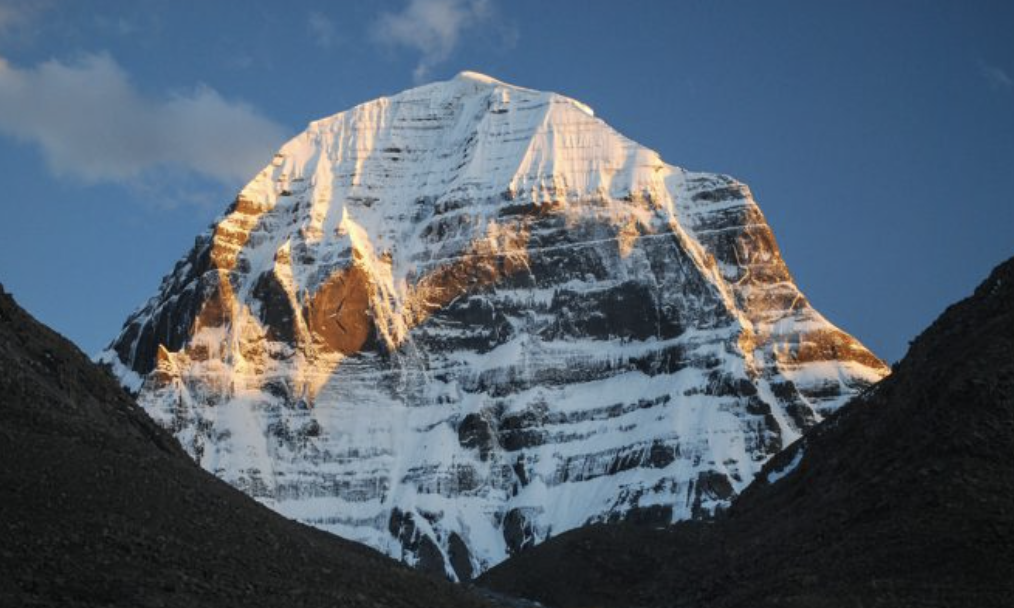
7 Lessons From an Impossible Pilgrimage to Mount Kailash
Two days before we left for Mount Kailash, a catastrophic flood devastated the Nepal–Tibet border, the exact route of our pilgrimage.
Villages were destroyed. Roads vanished. Pilgrims were stranded.
We went anyway.
We flew San Francisco → Singapore → Kathmandu.
In Singapore, after visiting a Buddhist temple, I fell and badly injured my left ankle. The pain was excruciating. At the hospital, they wrapped it, gave me medication and recommended an X-ray to check for a fracture.
I bought crutches instead and flew to Kathmandu.
We landed to the news we had feared:
Kailash tour was cancelled.
The border route had been destroyed.
“Come back next year.”
Instead of going home, we searched for another sacred journey and found Muktinath, nearly 12,500 feet high in the Himalayas. My left ankle and foot were blackish and swollen. I sprayed more of the local medicine, believed it was a mild sprain and continued on.
After six hours over rough mountain roads, riverbeds and falling rocks, I arrived on crutches and somehow walked beneath Muktinath’s 108 sacred water spouts, 400 steps climbed. The Buddhist temple there has an eternal flame emerging from the mountain; we were overwhelmed by the beauty of the area.
Then we surrendered.
Kailash wasn’t happening. There were no messages from the six tour operators I had called and begged to get us a new Chinese visa and find us a car and driver to take the route still open.
In Hong Kong, just two hours before our flight to San Francisco, a message appeared:
“A driver and car is waiting for you in Lhasa. If you still want to go to Mount Kailash, you can go.”
We cancelled our flight home, retrieved our luggage, and rerouted through Chengdu to Lhasa, Tibet. A special shoutout to Cathay Pacific for graciously retrieving our checked bags and refunding our San Francisco flight, all with the warmest smiles! By now, my ankle had swollen to alarming proportions, and the pain was getting worse. But the show must go on! We had come for the extraordinary Fire Horse pilgrimage to Mount Kailash, an opportunity that comes only once every 60 years. I wasn’t about to let a little pain, a severely swollen ankle, or what I would later discover were two fractures stand between me and my sacred mountain!
We arrived in Chengdu, a city we had never heard of, only to discover a dazzling, futuristic metropolis famous for its pandas. Even Sujay’s coffee arrived with a panda sculpted into the foam! From the luxury of the Chengdu Ritz-Carlton, our journey took us to a modest hotel in Darchen, the Manasarovar Hot Springs Hotel, and finally the bare-bones Dirapuk Guesthouse on Day One of the Kailash parikrama. With each stop, another layer of comfort disappeared from toilets and showers to even hot food. My meals were white rice, bananas and nuts. Altitude sickness, fierce headaches, nausea and freezing temperatures became our constant companions.
And then there was my guide.
“How will you cross Dolma with that foot? HOW? HOW?” he would exclaim several times a day, glaring at my swollen, bruised ankle while furiously smoking another cigarette. He insisted the crossing was dangerous, that I should turn back. My ankle, I would later discover, had not one but two fractures.
Day Two. Dolma La Pass. The day everyone feared had gotten even worse. Temperatures had dropped overnight; there was snow and sleet on Dolma, and it could get worse.
It was pitch-black outside. The guide was adamant: I had to return. Continuing, he warned, would endanger everyone. Another woman was already preparing to descend.
I turned to my husband, Sujay. “What do you think?”
He looked at me without hesitation.
“Let’s do it.”
And so began the most physically demanding journey of my life.
Eight gruelling hours later, through freezing winds, relentless rain, treacherous terrain and unimaginable exhaustion, we had crossed Dolma La, the sacred, mystical gateway of the Kailash pilgrimage. We were drenched to the bone. Our backpacks were soaked. Nothing had remained dry despite our rain gear.
But we had made it.
My guide, perhaps relieved that his worst nightmare was behind him, immediately proposed returning to Darchen. A warm bed! Hot food! Dry clothes! Surely we had suffered enough?
Sujay and I looked at each other and smiled.
We would stay and finish Day Three to complete the full parikrama. One more night in a freezing, dormitory-style guesthouse with no toilets or real food. Wet clothes, boxed food and all.
Day Three brought the reward.
The clouds parted. Sunlight broke through and what followed was six hours of walking through what I can only describe as paradise.
Majestic mountains, cascading waterfalls, pristine valleys and winding pathways of breathtaking beauty. Every turn revealed another landscape more extraordinary than the last.
If the Devas—the celestial beings of Hindu tradition—had a home on Earth, surely this was it.
We finally drove back to Darchen after completing a divinely blessed three-day Mount Kailash parikrama.
Here are the seven lessons Kailash gave me.
1. Take a Sankalpa
Make a sacred resolve and watch how reality restructures around it.
You don’t need to know how. Commit deeply to the what.
Our road literally disappeared under a tsunami that took away thousands. Another one appeared.
2. Surrender to Not Knowing
Had I thought through the floods, fractured ankle, altitude, freezing temperatures and risks, I would have gone home.
Instead, I learned to ask only:
What is the next step?
Sometimes surrender isn’t giving up.
It’s giving up the need to know what happens next.
3. Don’t Live Inside Someone Else’s Limits
Doctors, guides and others told me I could not cross Dolma La, the brutal high point of Day Two.
They weren’t wrong to warn me. They were speaking from what they could see.
But another person’s perspective doesn’t have to become your possibility.
Listen carefully. Understand the risks. Then choose consciously for yourself.
4. Angels Are Real
At almost every impossible moment, someone appeared.
A stranger helping me down Dolma La. Someone solving a logistical crisis. An acupuncturist willing to see me on a Saturday when the hospital was closed.
Maybe angels don’t always have wings.
Sometimes they are simply the right human being arriving at exactly the right moment.
5. Expect Nothing to Receive Everything
After three freezing, exhausting days around Kailash, we returned to Lhasa.
September 9 was my birthday.
I spent it inside the Potala Palace, the historic home of the Dalai Lamas, a place representing centuries of Tibetan Buddhist wisdom, compassion and spiritual practice.
I hadn’t asked for a birthday gift.
I couldn’t have imagined a greater one.
Sometimes expecting nothing creates space for gifts you wouldn’t even know to ask for.
6. Everyone Should Make a Pilgrimage Once
A vacation asks:
What will I experience?
A pilgrimage asks:
Who will I become?
Remove comfort, certainty and control, and something deeper becomes visible.
The sacred mountain may be the destination.
Transformation is the pilgrimage.
7. Consciousness Expands with Gratitude
On Kailash, I watched people whose lives are spent guiding strangers safely up and down a mountain.
Then I returned to my warm home, hot water, abundant food, healthcare, transportation and extraordinary comforts.
I was overwhelmed with gratitude, yet haunted by a profound question: Why have I been blessed with a life of such comfort and abundance, while the pony man spends his days enduring unimaginable hardship, guiding strangers through these unforgiving mountains? What determines the vastly different lives we are born into?
Perhaps the greatest blessing of a pilgrimage isn’t what happens on the mountain. It’s not the physical endurance you develop or even the reflective questions.
It’s the expansion of gratitude for your life and blessings. Then the natural question follows: what can I do to serve more, give more, be more?
Because sometimes, when the pilgrimage ends, that is when the true pilgrimage begins.